
🏗️ SOLAR STRUCTURAL DESIGN & ENGINEERING
A Strong Solar System Begins with a Strong Structure
At Ittehad Solar Energy, our structural design and engineering process focuses on safety, strength, stability, durability and efficient use of the available space.
Whether the project is for a house, commercial building, factory, school, hospital, warehouse, agricultural facility or ground-mounted solar plant, the supporting structure must be designed according to the actual site conditions.
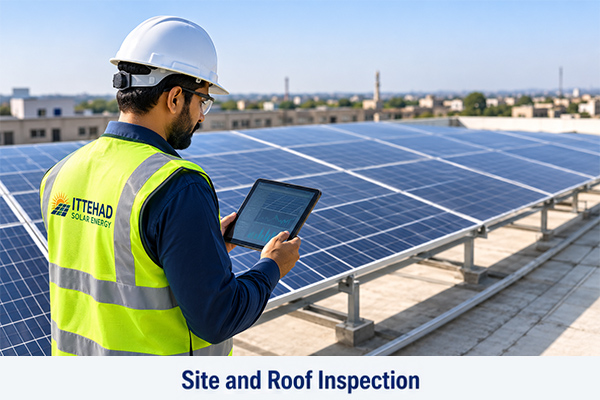
1. Detailed Site and Roof Inspection
Before designing the solar structure, our team evaluates:
- Available rooftop or ground area
- Existing roof construction and condition
- Concrete slab, metal sheet or other roof type
- Parapet walls and nearby structures
- Water tanks, pipelines and rooftop equipment
- Existing cracks, weak sections or damaged surfaces
- Drainage points and rainwater flow
- Access routes for installation and maintenance
- Nearby buildings, trees and other sources of shading
- Safe distance from roof edges and restricted areas
This inspection helps us prepare a design that fits the property rather than using the same standard structure for every project.
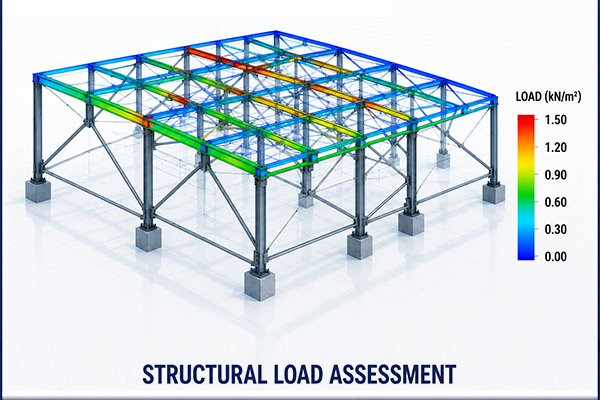
2. Structural Load Assessment
Solar panels, mounting frames, cables and related equipment add weight to the roof. The structure must therefore be evaluated before installation.
Our engineering assessment considers:
- Weight of solar panels
- Weight of steel or aluminium mounting frames
- Weight of walkways and cable-management systems
- Additional maintenance loads
- Wind pressure and wind uplift
- Vibration and movement
- Seismic considerations where applicable
- Long-term exposure to weather conditions
The purpose is to ensure that the solar installation remains secure during normal operation and challenging environmental conditions.
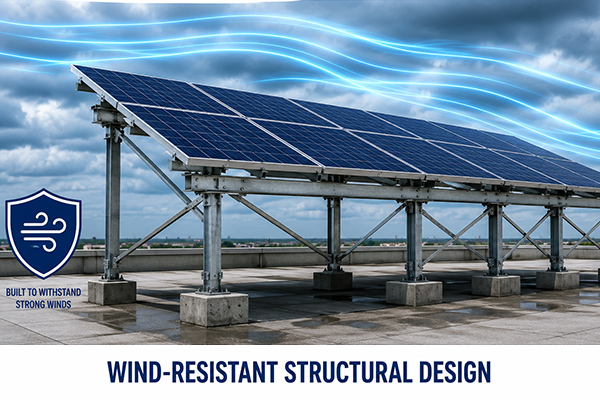
3. Wind-Resistant Structural Design
Wind can create significant pressure above and below solar panels. Poorly designed structures may loosen, bend or become unstable during strong winds.
Our structural planning considers:
- Building height and rooftop exposure
- Direction of prevailing winds
- Panel height above the roof
- Panel tilt angle
- Distance between rows
- Position of edge and corner panels
- Anchor points and foundation strength
- Required bracing and reinforcement
A properly engineered structure distributes loads safely and reduces unnecessary stress on the roof and solar panels.
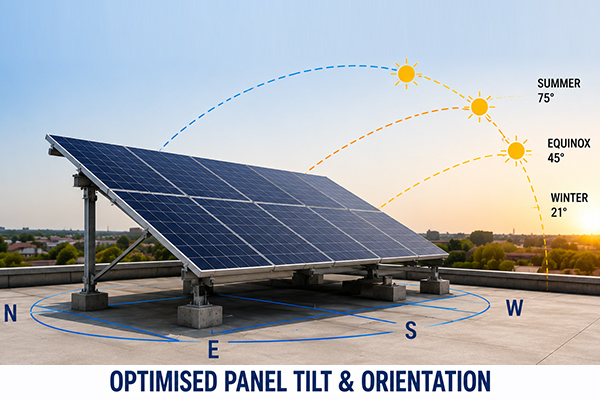
4. Optimised Panel Tilt and Orientation
The angle and direction of solar panels influence energy production.
Our team studies:
- Available sunlight
- Roof direction
- Panel orientation
- Seasonal sun movement
- Required tilt angle
- Shadow movement throughout the day
- Space between panel rows
- Cleaning and maintenance access
The objective is to achieve strong solar production without compromising structural stability or rooftop usability.
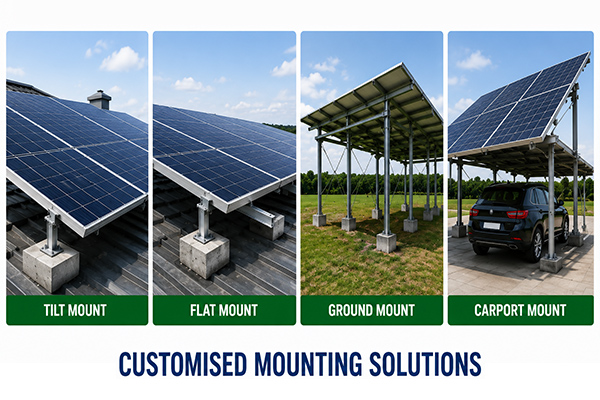
5. Customised Mounting Solutions
Different properties require different structural solutions. Depending on the project, we can plan:
- Elevated rooftop solar structures
- Low-height rooftop mounting
- Ballasted mounting systems
- Anchored mounting systems
- Metal-sheet roof mounting
- Carport solar structures
- Ground-mounted solar structures
- Solar structures for agricultural applications
- Structures designed around water tanks and rooftop equipment
- Walkways for safe cleaning and maintenance
Every structure should be selected according to the site, system capacity and operational requirements.
6. Material Selection and Corrosion Protection
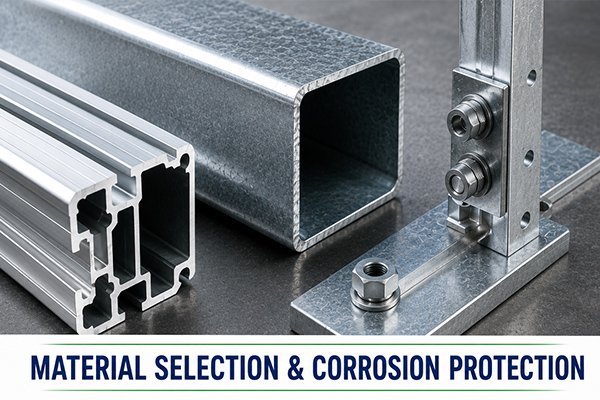
Solar structures remain exposed to heat, humidity, rain, dust and environmental pollution for many years.
For long-term durability, structural planning considers:
- Appropriate steel or aluminium sections
- Material thickness
- Strength of columns, beams, rafters and bracing
- Galvanisation or suitable protective coating
- Rust-resistant nuts, bolts and fasteners
- Isolation between dissimilar metals
- Proper welding and fabrication quality
- Protection of drilled, cut or welded areas
In coastal and high-humidity environments such as Karachi, corrosion protection is especially important.
7. Roof Anchoring and Waterproofing
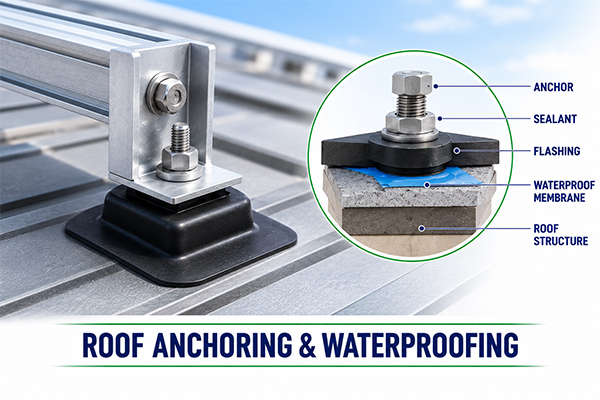
Incorrect drilling and anchoring can damage the roof and cause water leakage.
Our installation planning focuses on:
- Correct positioning of anchor points
- Suitable anchor type and embedment depth
- Avoiding unnecessary roof penetrations
- Protection of waterproofing layers
- Proper sealing around penetrations
- Maintaining the natural drainage path
- Preventing water accumulation around foundations
The structure must support the solar system without creating future roofing problems.
8. Safe Access for Cleaning and Maintenance
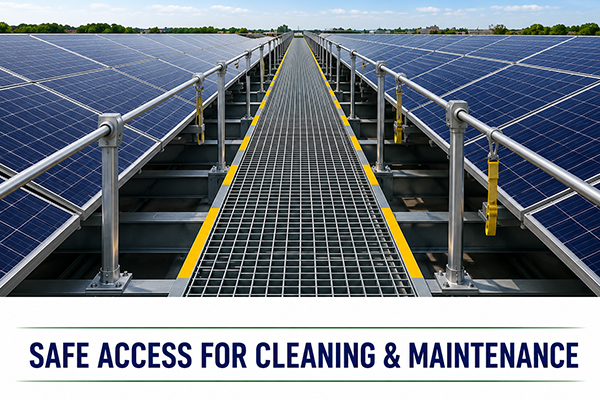
Solar panels require periodic cleaning, inspection and maintenance. A crowded layout may increase energy production on paper but make the system difficult or unsafe to maintain.
Our layouts consider:
- Safe walking space
- Maintenance corridors
- Access to every solar panel row
- Space around inverters and electrical equipment
- Access to junction boxes and cable routes
- Safe distance from roof edges
- Future panel replacement requirements
Good engineering protects both the solar system and the people maintaining it.
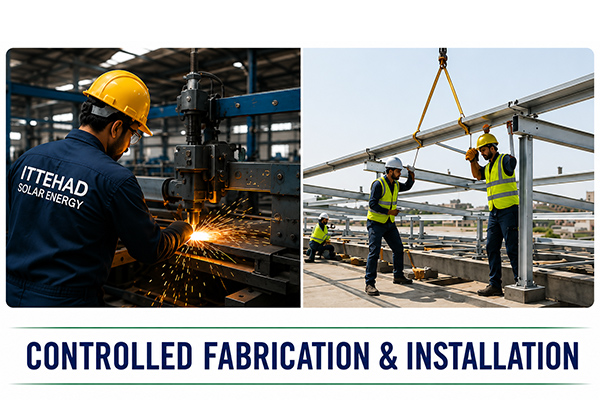
9. Controlled Fabrication and Installation
The performance of a structural design depends on the quality of fabrication and installation.
During execution, attention is given to:
- Correct dimensions and levels
- Accurate alignment of columns and beams
- Proper welding and bolted connections
- Adequate bracing
- Correct tightening of fasteners
- Uniform panel alignment
- Protection of finished surfaces
- Removal of sharp edges
- Final inspection of all connections
Every structural component must work together as one stable system.
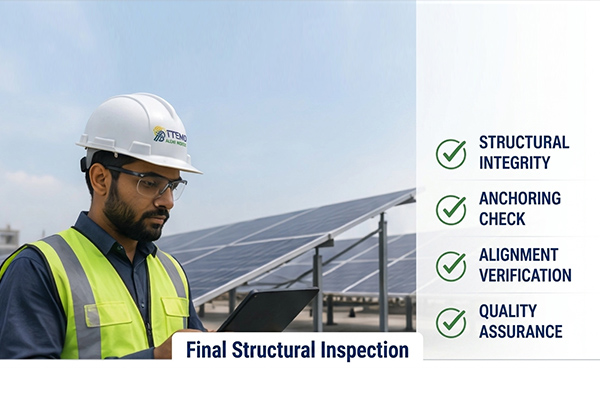
10. Final Structural Inspection
Before project completion, the installation should be checked for:
- Alignment and level
- Stability of columns and frames
- Tightness of bolts and fasteners
- Quality of welding
- Strength of anchor points
- Condition of protective coating
- Panel-clamp positioning
- Drainage clearance
- Maintenance access
- Any signs of movement, bending or weakness
Why Structural Engineering Matters
A poorly designed solar structure can cause:
- Roof damage
- Water leakage
- Panel movement
- Excessive vibration
- Broken mounting connections
- Reduced panel life
- Safety risks during strong winds
- Difficult cleaning and maintenance
- Higher repair costs
A professionally engineered structure protects your property, your solar equipment and your investment.